Showing posts with label Book Reviews. Show all posts

Thursday, December 17, 2015

Lady Chatterley’s Lover vs. Chokher Bali: A thematic comparison


Image Source: Flipkart 


It is enthralling to see how themes in different novels can often converge despite staying concealed from the eye of a casual observer. At times, the true theme of a tale is so deeply embedded that one has to dig out the superficial veneer to get to it.
'Lady Chatterley's Lover', a classic by DH Lawrence, perfectly exemplifies this view. Prima facie, it is a story about adultery though close reading of the text can throw up surprising epiphanies.

Penned and published in 1928, the highly controversial novel has had to endure the murderous gaze of prudish critics who lambasted the book severely at the time of its release. It was strongly condemned for its unapologetic sexual tone and graphic imagery which bordered on the taboo. But was there more to it than what met the eye of the immediate society?

The novel, sprawled over 300 pages, chronicles the story of Lady Constance Chatterley who is matrimonially chained to a man half-paralyzed. The lady's youthfulness is waning away behind the mundaneness of the usual chores of a life that is prosaic at its best. She is deprived and her body discovers redemption in the company of their keeper Oliver Mellors. What follows is social blasphemy, a torrid affair of adultery between a woman of higher stature and a man from the lower rung.

But though the woman's need for physical pleasure at the prime of her youth cannot be refuted, it is significant to discern the strong undertone of loneliness which is constant throughout the story. Lady Chatterley is not merely physically unsatisfied with her crippled husband but is also living in mental isolation. The disparate mindsets of the two people, with the man as a snooty high-nosed gentleman and the egalitarian woman bearing irrevocable sympathy towards the menial class, further distance her from Mr. Chatterley and intensify her loneliness. Her silent disapproval turns her away from him (even without her realizing so), makes her apathetic to his industrial ambitions and eventually makes her fully aloof, thus aggravating her solitariness.

So, should 'adultery' be labelled as the theme of the story, as has been done by generations of readers and critics? Or is 'loneliness' the underlying and the truer theme of the book?

Despite the above arguments which advocate for the permanence of loneliness, the question is debatable and cannot be put to rest easily. Theme is supposedly more concrete than motif and while the former is a constant, the latter is recurrent. There is a very thin line there as far as this novel is concerned, but probably it would be just to declare a woman's mental solitariness as the veritable theme, with the her recurrent sexual affairs as the motif.


“Lawrence was preaching sex as a kind of sacrament, and more than that, one that would save us all from the results of war and the nastinesses of our civilisation. …. ‘it is the crime of our times, because what we need is tenderness towards the body, towards sex, we need tender-hearted fucking.’”    [Doris Lessing's introduction to the new Penguin Classic edition]


On similar lines, one can put another classic on the table. Tagore's 'Chokher Bali' is similar in its theme even though here it is the man who goes out of his way to surrender to an extramarital fling. Mahendra, on finding no mental connection with his beautiful wife Ashalata, gets drawn towards Binodini, a widow who has come to stay at their home and with whom he is able to strike fascinating intellectual conversations.

 While Mahendra's attraction towards Binodini may be attributed to his need for a woman of his type, the imposing question that raises its fangs and demands to be answered is 'whether his felonious actions are governed by carnal desire or by the need for quenching a personal loneliness.' And once again, we find ourselves at a crossroad since the puzzling question can have multiple answers just the way this literary work can be interpreted in multiple ways.
It would appear that perhaps both are alone in their own rights (physically, mentally and figuratively) and they seek not merely sexual gratification but intellectual accompaniment. So, it wouldn't be wrong to call it a book dealing with loneliness rather than with adultery. Here too, we see aloneness as the theme and sex as the motif. But opinions will always be divided and many will see it the other way round (i.e. sex as the theme and aloneness as the motif).

Interestingly, both the pieces have been penned around the same time (1928 an 1903) and both project the woman in a negative light, without spraying much stain on the man's character. If Lady Chatterley and Binodini were wrong to tread on this path, then Oliver Mellors and Mahendra were equally wrong, if not more. But it is unfortunate that these stories are set in a patriarchal society which also hints at the underlying theme of male chauvinism; something which Lawrence and Tagore have masterfully expounded.


(Ritesh Agarwal,
CL-  Jadavpur University


Tuesday, August 18, 2015

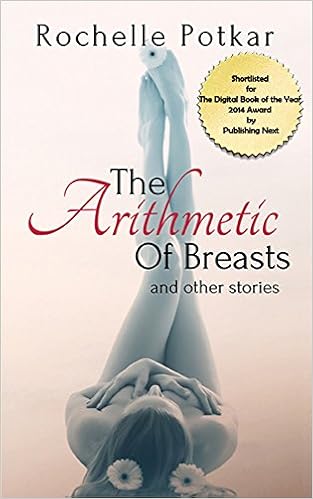
The Arithmetic of Breasts Review: An intelligently philosophical erotica


Image source: Amazon


Book: The Arithmetic of Breasts and other stories
Author: Rochelle Potkar
Genre: Fiction, anthology
Publisher: Notebook Press
No. of pages: 115
Cover price: Rs 115
[Shortlisted for The Digital Book of the Year 2014]


It is a book that is brutal, realistic and an ironic amalgamation of anatomy and arithmetic. The book can be critiqued using feminist perspective too, though the element of storytelling, entertainment for mass readers and clever use of language make it impossible to club it as a purely feminist book.


Here is a story-by-story review of the entire anthology-


The Arithmetic of Breasts

3.5/5
An engaging story that matures as the protagonists mature and age. From lust to love, the transformation is life-like, seamless, riveting. That’s the arithmetic of human relationships. The use of mathematical terms to describe human anatomy is clever, and at certain places, metaphorical. The story, overall, stirs you up in bits but falls short of being a memorably great one.


The Room with a Sea-View

4/5
A very difficult read but an enlightening one. It tends to philosophize love. It has multiple layers to it, even a strong layer of originality. Some lines are quote-worthy and need to be penciled. Sample this:

His voice was soundless again today.

Sky Park

5/5
Use of geometry in this book is fascinating. Eg. The ‘springing buildings’ in this story described as an act by the Geometry God.
The story begins on a queer note, with a girl falling in love with a boy when he’s making out with another girl. There is powerful narration involving polyphony. Description of a suicide scene is so vivid that it is scary. The story is deeply psychological. Author takes you inside the mind of the character. To put it simply in the words of a character- “It is her mind talking to me.”


Dr. Love

4/5
A fresh story with a fresh plot. It highlights the importance of a face and how a surgical change in it is akin to a change of identity.


The Scent of a Conscience

4/5
It is an erotica; not a bland erotica but one that leaves you psychologically shaken. The story questions extramarital affairs but not in its puritan didactic form, rather in its visceral, hedonistic form.


A Place They Call Scary

3.5/5
A hard-hitting story that exposes the hypocrisy and sexual cravings of religious forces in the country, through the eyes of a young girl. The climax rattles you, leaving little difference between a young human girl and a Goddess.


Our Lovers

4.5/5
Crisp story. A two-page quick read that ends with a thundering jolt, not waking you out of your leisurely torpor with a shock but rattling your soul with an epiphanic hammer.


The Troll on Page 16

3/5
The story gives a peek into the psyche of a lecher. How he fakes complaints to a doctor and thus lives all his fantasies. An absorbing read that sets you up for a revelatory climax that unfortunately never comes.


What Men Want

2.5/5
A very engrossing story if one is wanting to get high. Conversations between old inebriated friends always give a voyeuristic pleasure to readers. But the story comes with no after-effect and, hence, pales in comparison to the other wonderful stories in the book.

As a bonus, the book ends with excerpts (full chapter 1) of Potkar’s debut novel Dreams of Déjà vu.

Should you buy this book? Yes, it is pretty hooking apart from being a highly intelligent book.


[The review was done on request by the author who was kind enough to send me a hard copy after listening patiently to my rants of anti-ebook theories.]


-Ritesh Agarwal
email: ritzy182000@gmail.com


Thursday, February 26, 2015

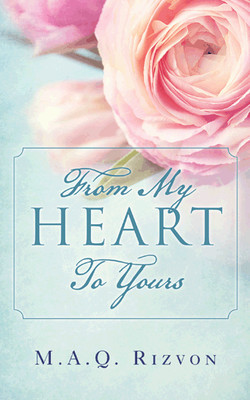
From My Heart to Yours- Review of a poetry book

Image source: Goodreads.com


Book: From My Heart To Yours
Author: M.A.Q. Rizvon
Genre: Poetry, poem
Publisher: Partridge (a Penguin Random House Company)


‘From My Heart to Yours’ is thin book with some heavy words that can stir you at times, move you on a few occasions or leave you impassive. The book is an anthology of poems thought and scribbled over a few decades by M.A.Q. Rizvon whose journey itself has been a poetry. A post master in the 1960s, an insurance agent in the 70s and a film journalist in the 80s, he has straddled disparate fields, garnering multiple memories on his way and picking up isolated threads that finally come together in the shape of this book.

So, it is not hard to make out that the poems in this book are mostly about people, about relationships, about faith, about God and about love and life in general.

To do justice to some of the wonderful lines, I would just present them here-

Great thoughts have spread the carpet of grass
For us to wallow in joy and roll on and on.”   (Great Thoughts)


I came to you on enfeebled feet
Heavy of heart downcast in eyes.
And, in a flash, you lifted me     (Reunion)


“… a moon
Comes on more often to share our sleepless nights.”   (Man barricades against himself)


The lighting that came was looking for me”  (Gratitude to the one who made me)


While I was really charmed by the metaphorical beauty in the above lines, here is an intelligent use of alliteration that I couldn’t fail to notice-


“In a verdant, vivid vale of Kashmir” (The song of a sixteen-year old)


A few other beautiful lines-

“She gave him a parting kiss of pain
………
She left him the memory of the life he lived”  (A dew drop on a rose in bloom)


And I would leave you with these angelic thoughts


“She rose like fragrance…
A fairy, …
High above a rainbow”    (A note of love)


-Ritesh Agarwal

Review done on request by Ayesha Rahman (the grandchild of M.A.Q. Rizvon) whose handwritten letter warmed my heart.


Monday, November 10, 2014

Harry Potter book review for school students


JK Rowling, the writer of Harry Potter series


'Harry Potter' is a popular fantasy series penned by the renowned writer JK Rowling. Split into seven books, the series depicts the odyssey of a boy named Harry Potter from boyhood to adulthood, as he discovers his true identity (that of a wizard), gets tutored/mentored in Hogwarts School of Witchcraft and Wizardry, faces demons, undergoes hormonal changes and vanquishes the evil wizard Lord Voldemort.

Written in lucid style with a hint of wit, Rowling is elegant in her prose. The absence of abstruse vocabulary makes the books easily comprehensible to teenagers and kids. However, it would be a blasphemy to call Harry Potter strictly as a children's book. The book has been widely read and appreciated all over the world by people from six to sixty.

Rowling has craftily created a confluence of two worlds-one is the real world of non-magical humans (muggles) and the other is a makeshift world of sorcerers, goblins, giants and house 
elves.

The plot is incantatory and there are several parallel stories that move together. The major part of the story is set in the school of Hogwarts, a setting which is relatable to the kids and nostalgic to the adults. Overall, the series is steered by powerful characters, an addictive plot and an arresting narrative style. However, it is ironic that the book that has influenced millions of people, has also been criticized by certain sects like the clergy.


~Ritesh Agarwal


Image courtesy: ign.com


Sunday, September 7, 2014

Bubble Wrap Review: A well-deserved assault on society

Image source: Google


Book: Bubble Wrap
Author: Kalyani Rao
Publisher: Harlequin
Genre: Fiction
Number of pages: 185
Cover Price: Rs 250
Rating: 3 out of 5

Review: The first thing that delights the mind is the cover pic which is eloquent, powerful and picturesque, not to forget relevant and engaging. Second good thing about the book is that its publisher is a more notable one in this world teeming with a sudden mushrooming of publishers and self-publication firms. The third good thing is that the story is not what the title suggests. 
“Bubble Wrap” may ostensibly appear like another bubble-gum college romance (a genre which has become the favorites with readers and sadly with publishers too). But “Bubble Wrap” is everything but a cheesy college romance.

It is a touching and realistic story of a young girl (Krishna) who gets married off even before she hits puberty. The setting of a small town, the plot revolving around the theme of child marriage and the society’s hypocritical and callous take on widows are the reasons why this book is worth a read.

Also, the fact that the 12-year old Krishna (the girl who gets married off at such a tender age) takes the role of the narrator and the readers see her world through her eyes is a winner. Her cousin’s widow Gudiya (slightly older at 15) assumes the role of her mentor and despite the mud which society flings at her widowed status and despite getting raped by an old man, she shoulders the courage of shielding the 12-year Krishna from similar torments. They escape!

The second half goes slightly wayward as the plot thins though the reader does not lose his grip over the book. One must not dissect ‘Bubble Wrap” from the perspective of plot or of narration or of language which are simple and staid, but rather from the perspective of the bold story-telling which is a brutal and well-deserved assault on the society.

The job done by author Kalyani Rao is a credible one because she maintains simplicity and innocence in language which reflect the thought process of the juvenile narrator. Perhaps, the second half could have been tauter but the shocking climax more than makes up for the languidness. The book will not stay with you till ‘forever’ but will stir a few emotions and make you sigh as you turn over the last leaf.


-Ritesh Agarwal


The book is available at throwaway price at Flipkart. Kindly use the below link to check it out. 


Monday, August 4, 2014

Lost in Pattaya Review: A saga of irony of life

Image source: Google

Book: Lost in Pattaya
Author: Kishore Modak
Genre: Fiction
Publisher: Grapevine
Number of pages: 215
Cover Price: Rs 150

Rating: 3.5 out of 5

Review: “Lost in Pattaya” is a book which can grab the attention of a puritan because of its simple yet arresting cover design. In the age of bubble gum cover designs, it is heartening to see a cover design that is poignant and subtle instead of being in-your-throat.

The book, penned by Kishore Modak, is a painful tale told mostly in flashback mode as a father recounts the loss of his daughter in the city called Pattaya. The man loses years and the prime of his youth in chasing the darkened doors and defamed corners of the ill-famed city to look for his little girl. In the end, it is perhaps the man himself which is swallowed by Pattaya rather than the little child.

The title, therefore, though is directed at the girl who gets ‘lost in Pattaya’ can be taken metaphorically to hint at the father who, in desperate and failed search of his loving child, loses himself. It is his body, soul and mind which get ‘lost in Pattaya’.

The writing is leisurely but the use of language is heavy. Structuring of sentence is good at places, and excellent on occasions. The story somewhat loses its thread in the second half which appears weaker than the first half. However, there is the irony of life and of relationships which are the true heroes of this saga.

I will quote myself and say, “This book is good without being great.”

Should you read it? Yes.


[The review has been written on request by Grapevine Publishers but the opinions are mine]


Ritesh Agarwal


Saturday, June 14, 2014

Appointment with Death Review: Nail-biting ambiance with an unusual finish


A Hercule Poirot mystery


Book: Appointment with Death
Author: Agatha Christie
Genre: Crime fiction (murder mystery), classic
Publisher: Harper Collins
Year of publishing: 1938
Rating: 3.5 out of 5

Review: In the back cover, this quote by Observer is an instant catcher- ‘Twice as brilliant as Death on the Nile, which was entirely brilliant.’

So, when I prodded MySmartPrice.com to ship me this book for the monthly review, they benignly obliged and I was through this book within a few sittings.

‘Appointment with Death’ is a charming title. While the plots and the narrative of Dame Agatha are extolled all over the world, her power to come out with head-turning titles is a talent which has remained pretty much unsung.

The book is set in the Middle East in the land of Petra and our crime Queen has naturally borrowed a lot from her own traveling experiences of these countries. An authentic classic setting is a great precursor to a sensational murder and the author dutifully takes her time to set up the ambiance for that murder, which could so easily have been the perfect murder but for one Poirot….alas.

The victim this time is an elderly but tyrannical lady called Mrs Boynton who holds all the strings when it comes to her family (her children and daughter-in-law). So powerfully evil is her malevolent nature and dictatorial mindset that her family live a compromised life without any liberty of their own. So, when her corpse is found sitting on a chair like a monstrous swollen Buddha, no member of her family is perturbed. It is as if her death came as a reprieve for all.

No wonder when Hercule Poirot jumped on the scene, the moustache-flexing little big man had a suspicious eye on everyone. And how can you attribute the incident to a case of natural death when her wrist clearly had a puncture mark etched over it?

Poirot believes (actually he knows) that he can solve the mystery through a psychological route. And our little big man has accepted the challenge of finding out the hunter in a space of mere 24 hours. So, will he succeed?

Of course, he will!

The climax once again is something which will be nearly impossible to predict. All the theories which buzzed in my mind while turning the last couple of chapters came to a crash in that fateful chapter where Poirot reveals the answers before the room-filled gathering in his usual dramatic fashion.

The way Hercule Poirot unravels everything one by one makes for a delicious read. But, the key to the puzzle may not make the readers go up in delight. An Agatha can be compared only to Agatha. On that count, I would dare say that the end disappoints a bit since the author plucks out a rather remote and obscure connection of the murderer with the murdered.

‘Appointment with Death’ is certainly not a ‘Murder of Roger Acroyd’ or a ‘Death on the Nile’ or even a ‘Murder in the Orient Express’ but it is yet another nail-biting crime fiction which has all those ingredients only an Agatha can brew.


[Review written by me on behalf of MySmartPrice which funds most of my books these days and in itself is a great website offering everybody something of everything. Do check it out.]


Kindly check out the book at cheapest available price (Rs 78) from here   


-Ritesh Agarwal, 
a sucker for Agatha's books

email: ritzy182000@gmail.com


tags: Agatha Christie books, Hercule Poirot books, book review of Appointment with Death, classics and crime


Wednesday, June 11, 2014

Lady Chatterley’s Lover Review and critique by Ritesh

Image source: Google


Book: Lady Chatterley’s Lover
Author: DH Lawrence
Genre: Classic, romance, drama
Year of publication: 1928
Rating: 4 out of 5

Review: It is unfortunate if ‘Lady Chatterley’s Lover’ has been side-brushed by some people as a pornographic novel. The theme of the story is loneliness. It is aloneness and not sex that has been depicted in its true naked glory (or un-glory). And after all, as I feel, one has to sometimes give in to his hormones.

Lady Chatterley is no different from me or from you in the fact that she is a human being who has her urges, her needs, and is perfectly entitled to getting subjugated by the malevolent powers of the hormones.

DH Lawrence is a master of words. It is frightening to see the way he manhandles words, as if he is their Lord and they his menials.

Due to the prudish nature of early 20th century, the book was considered an outright scandal and dismissed by many as a pornographic work. However, in ‘Lady Chatterley’s Lover’, DH Lawrence also projects (albeit with subtlety) the divide between the ruling class and the working class. The snooty attitude of the ‘gentlemen’ and the silent resentment of the ‘worker’ have been portrayed to full effect.

But, by and large, the story is still about adultery committed by one Constance Chatterley (Connie) whose body (and soul) seeks refuge in the shabby hut of their gamekeeper, propelled perhaps by her sex-starved hormones, egged possibly by her crippled husband’s chauvinistic mindset and prodded certainly by her quest to quench her loneliness.

A reader may however feel a sense of sympathy and compassion towards the climax. It may appear to some that the right man has been wronged. But then the feeling of sympathy would still have arisen had the other man been wronged. That perhaps is the beauty of the story.


~Ritesh Agarwal


Request: Kindly buy the book using the above link to help me raise my adopted pets.

Tags: classics, classic novels, DH Lawrence's works, review and critique of  Lady Chatter's Lover


Friday, May 30, 2014

Adhuri Prem Kahaniya Book Review: Power Publishers disappoints

Image source: Google


Book: Adhuri Prem Kahaniya
Author: Santosh Avvannavar
Genre: Romance, short stories
Publisher: Power Publishers
No. Of pages: 97
Price of book: Rs 150
Rating: 2 out of 5

Review: Let me begin with a rant directed at these selfies (self publishing houses) who despite stripping your wallet of all its money present you with a 90-page wafer-thin leaflet in the name of a book. I had high regards for Power Publishers and once even contemplated publishing a book with them. But what I have realized over the months is that they rarely care for quality and are just concerned with their share of profits. So in the name of a book cover, Adhuri Prem Kahaniya has got almost a whitewashed page. Unappealing and disappointing.

At Rs 150, a buyer would expect something voluminous, at least 150 pages. But again this book of a shade under 100 pages has been overpriced so that the publisher can warm up his pockets coz he knows that the book will not get many takers.

So far so good. No fault of the author.

But now coming to him (Mr. Santosh Avvannavar that is), he comes across as a well-educated guy with a good amount of intelligence. Perhaps, he could have benefitted had he hired an editor for this book which is full of inconsistencies. Some stories (out of 25) are innocent, some are humorous and almost all are relatable. But they are very short and written in haphazard way, as if penned by different people. There are errors of the kind which PowerPublisher should have rectified but either its editor is incompetent or perhaps they don't do even the basic needful unless showered with more money.

The author's attempt has been sincere and he has drawn a lot from his own experiences. But his own flaws aside, he has been done in by an unconcerned publishing house.

But by all means buy the book for going back to those mushy days of school and college romance.

[This book review has been done by me on special request by author Santosh Avvannavar and is an unbiased one.]


~Ritesh Agarwal


Friday, May 9, 2014

Crossroads by Preeti Singh: Chapter-by-chapter review


Book: Crossroads (It’s about time….)
Author: Preeti Singh
Publisher: ACCESS (an imprint of Authorspress)
Genre: Fiction, Romance
Number of pages: 264
Cover price: Rs 200


Here is a chapter-by-chapter review of ‘Crosswords’ by Preeti Singh.


Chapter 1
A Journey of Two Hearts (Falling in Love…)
Review: The beginning is smooth, simple and risk-free. Not bad but nothing extraordinary. However, the author chooses two different timelines, making her intentions clear that she’s going to make the reader shuffle between past and present.
Rating: 3/5


Chapter 2
In Pursuit of Ecstasy (Blossoming in love….)
Review: Preeti Singh’s way of describing love scenes in laudable. She provides graphic details but without taking help of tabooed words. ‘In Pursuit of Ecstasy’ is primarily about post-wedding romance, love-making and titillation. Author’s debut novel ‘Flirting with Fate’ too had some well-chronicled love scenes. The romantic readers do feel aroused but the celibacy-preachers don’t get offended.
Rating: 3.5/5


Chapter 3
I Loved an Angel (A child born of love…)
Review: An unpleasantly long chapter that just drags on and on with recurring episodes of husband-wife conflict. A few things lack conviction and the rest is very ordinary.
Rating: 2/5


Chapter 4
The Dark Rainbow (The pain in love…)
Review: Decently written. Our protagonist Kavita continues to endure domestic abuse.
Rating: 2.5/5


Chapter 5
Crossing the Line (Taking decisions in love…)
Review: Slow narrative is not absorbing enough. ‘Crossing the Line’ takes the acidic relationship of husband-wife further and propels the lady to cross a line she thought she would never cross.
Rating: 2.5/5


Chapter 6
Flirting with Fate (The twists of destiny….)
Review: One of the better chapters. Talks of a life fettered by loneliness and the despairs of a hapless woman. The brief visuals of an epileptic seizure add power to the narrative.
Rating: 3/5


Chapter 7
Love You Forever (True Friendship stays…)
Review: The chapter shows that life goes on. In between personal losses and conflicts, the mundaneness of life remains there inevitably.
Rating: 2.5/5


Chapter 8
 Truly, Madly, Deeply (When passion takes over….)
Review: When forbidden pleasures find a way out, things always become readable. Besides, Preeti Singh’s one major strength is to draw the reader with her explicit, yet inoffensive, description of erotic encounters.
Rating: 3.2/5


Chapter 9
Uff Yeh Emotions (Where only feelings rule….)
Review: The story offers its dose of emotions as our protagonist Kavita skids through happiness and falls headfirst over to a pile of sorrow. Not an extraordinary chapter but a somber one for sure!
Rating: 3/5


Chapter 10
Long Distance Relationship (Distance makes hearts grow fonder….)
Review: An unconvincing and melodramatic encounter between Kavita and her hubby Rajiv! The plot is threadbare and the love-hate relationship of the couple doesn’t evoke conviction.
The author redeems herself somewhat towards the fag end of the chapter by depicting a refreshingly bold mother-daughter relationship.
Rating: 2.5/5


Chapter 11
The Other Side of the Bed (Alone but not lonely…)
Review: Again, the husband-wife chemistry lacks conviction and the author seems to lend them haphazard emotions where neither of the protagonists know what they want or whom they love.
The shock proposal towards the latter part of the chapter offers some reprieve.
Rating: 2.5/5


Chapter 12
Lilacs Blooming in my Backyard (Happiness blooms…)
Review: A versatile chapter that spotlights the troubles of a single mother having a teenage daughter and how fame is no compensation for loneliness. One of the better chapters of the book!
Rating: 3.5/5


Chapter 13
Love me in the end (endless love…)
Review: In the final chapter, the protagonist finds herself standing at the crossroads of life where she has to make a difficult choice. And the choice she makes may not please a lovey-dovey reader but has a sense of poetic justice to it.
Rating: 3/5


All in all, ‘Crossroads’ is an okay book written with a lot of heart but fails to match the literary quality of its predecessor ‘Flirting with Fate’.
Overall rating: 2.5/5


-Ritesh Agarwal


Saturday, May 3, 2014

An Atlas of Love Review: Engaging but not enslaving


Book: An Atlas of Love (The Rupa Romance Anthology)
Authors: Several
Publisher: Rupa
Genre: Romance (Fiction)
No. of pages: 188
Cover Price: Rs 195 (ex-discount)

Review: Here is my story-by-story review of each of the 16 winning tales.

Story 1
Phoenix Mills (by Aurodeep Nandi)
Rating: 5/5
Review:  Such a well-crafted story of wit and realism that it sucks you like a vacuum and leaves a void when it spits you out of its chamber at the end. ‘Phoenix Mills’ is about a man, a mall and love found and lost. (This story won the 1st prize in the Rupa Romance Contest).

Story 2
Just One Glance (by Rhiti Bose)
3.5/5
Hard-nosed critics will surely trash this story calling it cliched and a done-to-death teenage romance. But ‘Just One Glance’ is so insanely readable and so incredibly relatable that you will love walking through its pages to relive your own mushy teenage days.

Story 3
Jilted (by Cecile Rischmann)
2.5/5
Okay, though ‘Jilted’ is readable and decently written, it is plain and has nothing extraordinary to offer. Why this story won the Rupa contest baffles me?

Story 4
The Unseen Boundaries of Love (by Debosmita Nandy)
4/5
What apparently looks like another chic lit romance turns out to be brutally intense, powerful and shocking towards the end. The final two pages helped this tale bag the 2nd prize in the Rupa Romance Contest.

Story 5
The Library (by Tarunima Mago)
3.5/5
Fresh story with some nice lines. Makes for a nice read but then nothing unforgettable. ‘The Library’ is engaging but not enslaving.

Story 6
Rock My Ass (by Shoma Chakraborty)
3.5/5
Ordinary hackneyed story but so incredibly well-written.

Story 7
The Impasse (by Aabhishek Patwari)
4/5
A mature story that talks about an aged man who has just lost his wife. Life becomes frighteningly lonely when you are at the fag end of it. ‘The Impasse’ brings plenty of lumps in the throat. One of the better stories of the book!

Story 8
Mixed Erotica Goes to the Party (by Sheila Kumar)
3/5
Writing is good but the story has nothing to offer. Readable throughout, engaging at times, arresting at odd corners but nothing too brilliant to admire.

Story 9
Something about Karen (by Abhishek Mukherjee)
3.5/5
A different kind of romance! Ryan loves Karen. But who is she? The climax may delight some and irk others. Quality of writing is good.

Story 10
The Affair (by Anita Sarkar)
3.5/5
A riveting extramarital affair with the usual do’s and don’ts. The climax was all set for that cheesy melodramatic finish we all love to feed upon. But Anita Sarkar chooses to play her cards differently (and intelligently).

Story 11
When You Least Expect It (by Meera Rajagopalan)
3/5
A feel-good story that advocates the concept of ‘signs’ in love and relationships.

Story 12
Urmila (by Sudha Subramanian)
2.5/5
The story talks of Urmila’s desolation during the 14-year exile period when she was away from her husband Lakshmana. It is a modest attempt by the author but fails to grip, delight shock or sadden.

Story 13
Blossoms (by Roshan Radhakrishnan)
3/5
Sweet innocent classroom love story. A bit too simple but a charming one all the same.

Story 14
Death of a Widower (by Monidipa Mondal)
4/5
Written with maturity, this story about a young man who lost his wife in a terror attack is painfully realistic and brutally readable. The end drops down at you all of a sudden like a bomb and leaves you to imagine whether it will explode or not.

Story 15
Post-Coital cigarette (by Aarti Venkatraman)
4.5/5
A devastatingly well-written story of a psycho-lover narrated in 1st person style, ‘Post-Coital cigarette’ is a smoldering stuff.

Story 16
Siddharth (by Pooja Pillai)
3/5
Story-wise it is another teenage romance and not quite the material for winning the 3rd prize in this Rupa Romance Contest. But it is narrated in that seductive way that you are just stuck like a Fevicol till the very end.  


[This review has been written on behalf of MySmartPrice.com, the web-based portal which apart from providing free books (including ‘The Lowland’ and 'The Hungry Tide') also helps me to discover the best prices for any product, be it a phone or a book or something as insignificant as a badminton racquet and something as significant as a shuttle cock.]


~Ritesh Agarwal
Email: ritzy182000@gmail.com


Monday, April 28, 2014

Book review 2 States- the story of my marriage


Source: Google


Author: - Chetan Bhagat
Publication: - Rupa
Pages:-269


[This review has been done as a guest post by blogger Rafaa Dalvi]


It would be fair to say that Chetan Bhagat after a couple of not so good books is back, although not with a bang. Apart from a change in name of the protagonist, this book continues from where “Five Point Someone” left. (Yes, this too is his life story!!) As with all his previous books, the prologue ensures that you stick to the book in order to find out how it came to be. Two IIMA grads, Krish and Ananya deeply in love with each other want to marry. However the catch is that Krish is a Punjabi whereas Ananya is a Tamilian and both the boy and girl want the blessings of both families before they tie the knot and both families are typically conservative to the core.  The five elements of Chetan Bhagat’s writing: - young and modern characters (IIT or IIM is an added bonus!), use of the F word during normal conversation, proposals (You’ll find four simultaneously!!), love story and a twist at the end, all are present in this book.

                 Although not famous for his literal capabilities, Bhagat ensures that with his ‘witty wordplay’ he brings a smile on your face quite a number of times as you read the book. The views of IIM boys about IIM girls, Krish’s first reactions on seeing the pictures of Ananya’s family, the arrival of Harsh at Ananya’s house, Krish’s second proposal are some of the places where as a reader you will enjoy. In addition to this, Krish and Ananya’s one liners throughout the book have been cleverly and aptly worded albeit with the use of profanity for the sake of it. Apart from this, the very contrasting cultures of Tamilians and Punjabis revives an age old rivalry between the north and south Indians adding healthy humour to the book and also giving an insight about India’s two most distinct cultures. With the help of two smart disclaimers at the beginning, the writer makes sure that he gets away with all the ridicule that he subjects Tamilians to. The obstacles that lovers have to face in India even today are blatantly portrayed in the book. It is indeed encouraging to see Krish and Ananya fighting for their love but not forgetting their families even for once.

              The book begins with a whirlwind romance wherein the characters meet, become friends, turn lovers, have sleepovers, sex, proposal,  get jobs in the first 40 pages itself. The progress from there on is fast but very predictable. Anyone familiar with bollywood would have no problems in predicting what happens next, except maybe for the last twist. The story will keep you fairly intrigued throughout but misses out on creating an overall impact or a lasting impression which “Five Point Someone” had successfully managed to do. The youth will certainly connect with the story and the fact that the book is priced at Rs. 95 surely makes it one-time read. Read it for entertainment, it’s definitely better than “One night @ call centre” and “3 mistakes of my life”. However it would suffice to say that you are not missing out on a literature masterpiece.
Rating- ***

PS: - The first page of the book goes…
This may be the first time in the history of books, but here goes:

Dedicated to my in-laws*
*which does not mean I am henpecked, under her thumb or not man enough


[Rafaa Dalvi, 22, is an Automobile Engineer who wants to be a versatile writer by following in the footsteps of his idols Charles Dickens, Michael Crichton, O. Henry and Roald Dahl. Already published four times, his stories can be read in three anthologies - Kaleidoscope, Tere Hi Liye and 25 Strokes of Kindness. He’s also the recipient of Indian Bloggers League Booker Prize 2013. He has been editing stories for almost three years now. Timely involved in writing movie scripts, he believes his scripts will soon see the light of day. 
He blogs at
 http://rafaadalvi.blogspot.in/ as The Indian Raconteur.]


Share please

How many stars?