Showing posts with label Books and Writers. Show all posts

Sunday, December 27, 2015

Children don't climb trees anymore


These last few days I have been slowly soaking the quiet pages of Ruskin Bond. He is one of those few people who have remained unperturbed by the growing domination of internet. His stories therefore are very rooted to the past. Much like Tagore, in Bond too, nature is almost a living character; one character constant in almost all the stories. So it is no surprise to find greying trees and their old remembered branches feature in several of Bond's stories.

The ease with which these trees spring up in so many of his stories is alarming for a modern-day reader like me. The familiarity that Ruskin seems to share with his long-remembered trees has a disturbing quality about it. Disturbing because the same trees seem to bluntly remind us of our own unfamiliarity with them.

In some of his stories, a greying and mellowed Ruskin revisits his leafy childhood pals, lamenting with a stab of sweet pain that he cannot climb them anymore, now that he is old and frail. But Ruskin, after all, can take heart from the fact that he hasn't fallen out of the race. He isn't lagging behind the new-age children. They don't climb trees any more than he does. The only worrying question is that will he really take heart from this fact?


-Ritesh. A


Thursday, December 17, 2015

Lady Chatterley’s Lover vs. Chokher Bali: A thematic comparison


Image Source: Flipkart 


It is enthralling to see how themes in different novels can often converge despite staying concealed from the eye of a casual observer. At times, the true theme of a tale is so deeply embedded that one has to dig out the superficial veneer to get to it.
'Lady Chatterley's Lover', a classic by DH Lawrence, perfectly exemplifies this view. Prima facie, it is a story about adultery though close reading of the text can throw up surprising epiphanies.

Penned and published in 1928, the highly controversial novel has had to endure the murderous gaze of prudish critics who lambasted the book severely at the time of its release. It was strongly condemned for its unapologetic sexual tone and graphic imagery which bordered on the taboo. But was there more to it than what met the eye of the immediate society?

The novel, sprawled over 300 pages, chronicles the story of Lady Constance Chatterley who is matrimonially chained to a man half-paralyzed. The lady's youthfulness is waning away behind the mundaneness of the usual chores of a life that is prosaic at its best. She is deprived and her body discovers redemption in the company of their keeper Oliver Mellors. What follows is social blasphemy, a torrid affair of adultery between a woman of higher stature and a man from the lower rung.

But though the woman's need for physical pleasure at the prime of her youth cannot be refuted, it is significant to discern the strong undertone of loneliness which is constant throughout the story. Lady Chatterley is not merely physically unsatisfied with her crippled husband but is also living in mental isolation. The disparate mindsets of the two people, with the man as a snooty high-nosed gentleman and the egalitarian woman bearing irrevocable sympathy towards the menial class, further distance her from Mr. Chatterley and intensify her loneliness. Her silent disapproval turns her away from him (even without her realizing so), makes her apathetic to his industrial ambitions and eventually makes her fully aloof, thus aggravating her solitariness.

So, should 'adultery' be labelled as the theme of the story, as has been done by generations of readers and critics? Or is 'loneliness' the underlying and the truer theme of the book?

Despite the above arguments which advocate for the permanence of loneliness, the question is debatable and cannot be put to rest easily. Theme is supposedly more concrete than motif and while the former is a constant, the latter is recurrent. There is a very thin line there as far as this novel is concerned, but probably it would be just to declare a woman's mental solitariness as the veritable theme, with the her recurrent sexual affairs as the motif.


“Lawrence was preaching sex as a kind of sacrament, and more than that, one that would save us all from the results of war and the nastinesses of our civilisation. …. ‘it is the crime of our times, because what we need is tenderness towards the body, towards sex, we need tender-hearted fucking.’”    [Doris Lessing's introduction to the new Penguin Classic edition]


On similar lines, one can put another classic on the table. Tagore's 'Chokher Bali' is similar in its theme even though here it is the man who goes out of his way to surrender to an extramarital fling. Mahendra, on finding no mental connection with his beautiful wife Ashalata, gets drawn towards Binodini, a widow who has come to stay at their home and with whom he is able to strike fascinating intellectual conversations.

 While Mahendra's attraction towards Binodini may be attributed to his need for a woman of his type, the imposing question that raises its fangs and demands to be answered is 'whether his felonious actions are governed by carnal desire or by the need for quenching a personal loneliness.' And once again, we find ourselves at a crossroad since the puzzling question can have multiple answers just the way this literary work can be interpreted in multiple ways.
It would appear that perhaps both are alone in their own rights (physically, mentally and figuratively) and they seek not merely sexual gratification but intellectual accompaniment. So, it wouldn't be wrong to call it a book dealing with loneliness rather than with adultery. Here too, we see aloneness as the theme and sex as the motif. But opinions will always be divided and many will see it the other way round (i.e. sex as the theme and aloneness as the motif).

Interestingly, both the pieces have been penned around the same time (1928 an 1903) and both project the woman in a negative light, without spraying much stain on the man's character. If Lady Chatterley and Binodini were wrong to tread on this path, then Oliver Mellors and Mahendra were equally wrong, if not more. But it is unfortunate that these stories are set in a patriarchal society which also hints at the underlying theme of male chauvinism; something which Lawrence and Tagore have masterfully expounded.


(Ritesh Agarwal,
CL-  Jadavpur University


Saturday, October 3, 2015

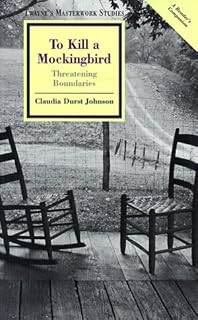
Hegemonic theme of To Kill a Mockingbird

Image source: Google images


‘To Kill a Mockingbird’ (by Harper Lee) has been tormenting the readers’ conscience for the past fifty years, drawing them into a world of racial bigotry and questioning our social and cultural values.

Narrated from the point of view of a girl-child, the novel explores the hegemonic white-black relationship in America, how a black is wrongly accused of molesting a white woman, and how a white lawyer fights for the accused and how the jury, despite its contrary personal beliefs, declares the accused guilty of felony.


Their action, quite in congruity to the existing American society’s bigoted mindset, confirms how racism is a hegemonic social state (it works in the human mind’s psyche).


Ritesh Agarwal
email: ritzy182000@gmail.com


Thursday, February 5, 2015

Hermeneutics and diasporic novels


The Comparative Literature department of Jadavpur University played host to author Judy Fong Bates today and it was both gratifying and heartening for me to be a part of the audience. That is one good thing about being a student of JU. You get to meet, and even interact, with writers and poets from both Oriental and Occidental backgrounds.

The session introduced us to this woman-author who is Chinese by birth but has been living in Canada and hence her works are primarily diasporic, like those of Jhumpa Lahiri.
To be quite honest, I had had a heavy lunch that was having its soporific effect, making it difficult for me to direct my complete attention to what she was saying. On a couple of instances, I even dozed off, much to my chagrin and one Miss DDR will not be a happy person when she reads this.

But good ideas come to people either when they are in their bathtubs (please refer to Archimedes) or when they are just out of a nap. After failing to benefit much for the most part of the session (since I was groggy and also because the voice wasn't loud at the back bench where I was seated), I redeemed myself somewhat towards the final 5 minutes.
It was accidental, I would say in my defence, but the idea did fascinate me, and for a few moments, even I became my own fan.  *grins sheepishly*

Hans Robert Jauss' theory of hermeneutics erupted out of me all of a sudden (wish it had done so during the sem exam) and it struck me that a diasporic novel can have as many as four categories of readers who will receive the same piece of work with dissimilar emotions. In Judy's case (whose protagonist is Chinese living in Canada, like herself), these four kinds of readers will be:

1. A Chinese reader living in China and reading the story of a Chinese living in Canada.
2. A Chinese reader living in Canada and reading the story of a Chinese living in Canada.
3. A Canadian living in Canada (a local) and reading the story of a Chinese living in Canada, and
4. A neutral reader, say an Indian living in India and reading the story of a Chinese living in Canada.


Now, there is a good and subjective scope to analyse it, and this is where, I perceive, Jauss' Reception Theory springs into action.

The 1st kind of reader is a Chinese who presumably has never been to Canada. While reading the text, he will feel for the protagonist who shares his nationality but finds himself thrown into an alien world where he will be subjected to racial and cultural discrimination. The reader will undergo multiple emotions. He will be bemused at times, shocked on occasions, grieved and even disturbed in certain situations. He will feel the agony of the protagonist since there is a fraternal connect with him. However, he is an external reader who reads the story from the outside, knowing that it is not going to happen to him in his immediate surroundings. So, there is pity but not fear. (Like Ruskin Bond, at the recently held Kolkata Literary Meet 2015, had described reading a horror story as an experience of "safe fear"- you are scared for the protagonist, yet you feel safe, knowing that it is not going to happen to you).

But for the 2nd kind of reader, the reception of the text will be more personal. He is a Chinese living in Canada and thus shares the geography and associated circumstances of the protagonist. He will draw parallels with the journey of the protagonist and will often squeal, "oh yes, it happened to me too" or feel a jolt of fear, realizing that it may happen to him some day.

The 3rd kind of a reader is a Canadian and he will try to find himself not in the Chinese protagonist but in the authoritarian/discriminating/chauvinistic Canadian. He will either i) be quietly ashamed of the way outsiders are treated in his country or  ii) haughtily agree with the oppressor instead of pitying the protagonist (in this case, the reader is what I would call a 'passive racist'), or  iii) be indifferent, thereby playing a totally neutral reader (theoretically possible, though practically less probable).

So, for the 3rd kind of reader, we actually get three sub-categories, since individual readers will employ their personal subjectivity to arrive at three different viewpoints (and emotional response to the text) as expatiated above.

Then there is the 4th kind of a reader, the only kind that is totally unrelated to the protagonist and the anti-protagonist in terms of both nationality and immediate geography. He, therefore, has the liberty of reading the text for the purpose of pure pleasure and without undergoing the emotional burden of taking sides. However, complete neutrality is hard to achieve as it necessitates the reader to be completely isolated from such circumstances and also to employ an emotionless approach. So, he may get influenced disparately, depending on his background and cultural roots. For instance, an Indian reader, with a colonial past, is more likely to empathise with the Chinese protagonist in the book, while a European reader may not feel pity for the protagonist in the same degree and may even side with the anti-protagonist.

Coming back to the seminar at JU, perhaps I didn't frame my question to the best of my abilities but when I asked Judy as to "her target reader out of these four types", I couldn't extract out of her the answer I was looking for. Perhaps, she is herself unaware of the reader she is instinctively targeting (as she stated) but on my part, the profitable thing that came out of this session was my deeper understanding of hermeneutics.

-Ritesh Agarwal
Comparative Literature, Jadavpur University

05/02/2015


Tuesday, December 30, 2014

Why Sherlock Holmes couldn't settle down?


Sherlock Holmes is one fictional character who has transgressed every conceivable line of society, culture, language and class. Speculations around him have always courted newspaper headlines since the late 19th century when Arthur Conan Doyle fathered his most popular character. In recent years, the detective's character has been revamped owing to a few unfaithful portrayals by movie and TV stars. Perhaps, Doyle would be turning in his grave right now, given that the Y-gen girls cannot stop giggling over Holmes' rumored liaison with his companion Dr. Watson. Doyle never even hinted at the homosexual tendency of Holmes. On the contrary, he had sent a teaser down our bladders by making the sleuth a self-admitted admirer of one Irene Adler (who appeared in the short story "A Scandal in Bohemia", published in July, 1891).

Holmes never settled down though. Was he really in love with Irene or was he merely an admirer of her resourcefulness is something which should be left just the way it is- unsolvable and speculative. What is clear though is that he had a knack for getting too absorbed in thoughts while working on a case. Today's average college-going girl may not have really given him any brownie point for staying ungroomed. Ironically, girls do seem to have a mental orgasm everytime Benedict Cumberbatch parts with one of his devil-may-care smirks. But a real-life Holmes would definitely have been in need of a Gillette razor. A couple of swipes and there you have a face so smooth, slippery and kiss-ready that even Miss Adler would have done much more than saying, "Good night, Mister Sherlock Holmes."

So, when Robert Downey Jr. missed a great opportunity to bed Irene Adler in the movie, it was a clear "case of lost opportunity" and must have something to do with his unkempt, unhygienic look.

 Amazingly, the book Holmes, cites Listverse, was squeaky clean.


"Sherlock Holmes is actually described in The Hound of the Baskervilles as having a cat like approach to cleanliness"- Listverse.com


Like most popular literary characters, this one too seems to have been hit hard by the media makers. Seems like the 'real' Doyle's Holmes did shave regularly, though he couldn't have had access to the sophisticated shaving products we have today. Alas, he could so easily have been a married guy today.


Image source: Google


Pages cited:

1. http://listverse.com/2013/02/11/10-common-misconceptions-about-sherlock-holmes/

2. http://en.wikipedia.org/wiki/Irene_Adler


[This post is a part of #WillYouShave activity at BlogAdda in association with Gillette]


Wednesday, September 10, 2014

10 books which have stayed with me


Since this is a list of books that have ‘stayed with me’, I have desisted from picking books which I read in 2014 or 2013 (or else books like ‘Love in the Time of Cholera’, ‘Unaccustomed Earth’, ‘The Lowlands’, ‘Lady Chatterley’s Lover’ and ‘Autobiography of Agatha Christie’ would have surely made this task of picking only 10 books extremely difficult, though I must say that the task was still equally ‘extremely’ difficult and I had to bow in to my heart by including some personal favorites under the guise of the convenient category we love calling as ‘special mentions’.)    J

So, these are my 10 and I am not ranking them (so please do not agitate your brains):

1. War and Peace (love in the backdrop of war), written by Leo Tolstoy

2. The diary of a young girl (the memoir of a Jewish girl during Hitler's regime), written by Anne Frank

3. Papillon (autobiography of a convict) by Henri Cherriere

4. Harry Potter (you know what), written by you know who

5. Journey to the Centre of the Earth (Jules Verne)

6. The man-eaters of Kumaon (terribly thrilling tiger tales from British-ruled India), written by Jim Corbett

7. The Famous Five series (involves my first literary crush Anne), written by Enid Blyton

8. The hound of the Baskervilles (a pastoral horror setting), written by Sir Arthur Conan Doyle

9. Tales of Imagination by Edgar Allan Poe

10. Albert Einstein- a short biography (by RK Murthi)

Special mentions:

11.  Mixed Blessings (Danielle  Steel)

12. A walk to remember (Nicholas Sparks)

13. Malgudi days (RK Narayan)

14. Curtain- Poirot's last case (by Agatha Christie)

15. The murder of Roger Acroyd (a path - breaking crime novel), written by Agatha Christie


-Ritesh Agarwal,
Date: 10th September, 2014


Tuesday, June 17, 2014

The lady who loves classics too much


This post is dedicated to Asha Roy, the woman who reads (and loves) classics too much.

Last day she shared a pic with me. The pic described a classic as something which everybody respects but nobody reads. Till a few months back, I used to feel quite devastated at the preferences of the current generation of readers. But I upset myself no more. I have come to realize (call it an epiphany if you want) that classics are too beautiful to be understood by everyone. 

A classic is that rarely beautiful thing which can be appreciated only by those rarely beautiful people. You tell me, can an internet-bred 21st century romance ever be better than Victorian romance? Can Nikita Singh or Ravinder Singh or Chetan Bhagat or Durjoy Dutta (all bestselling authors in their own right) ever be purer than a Jane Austen or a DH Lawrence or an Emily Bronte?

But here comes the chimera. A classic requires a certain level of intellect and patience which not everybody has. Some readers find these voluminous books to be having quite a toil on their grey cells. Some frankly lust after books which move at breakneck speed. For them, the task of sitting through a Tolstoy is going to  be a laborious ask too intimidating to be ever encouraged.

But those who love literature and love it truly will neither find classics daunting nor laborious. Rather they will tremble before its beauty, stunned and elated at having a piece of old treasure on their lap.

This brings to mind a quote by Alfred Gardener I remember from my class 11 days, "If diamonds were as plentiful as pebbles, no one would have stooped to pick them up."

It is the rarity of a diamond that makes it so treasurable. In the same vein, it is the rarity of a true classic lover that makes him/her so delightful a person.

I am, hence, glad to have a friend in this girl. Even though there have been cracks in the friendship and a huge question mark looms over the tenure of the relationship, I am glad that our paths crossed. Over the years, we have had some fascinating conversations which only two true classic lovers could have actually had.


I am not sure of the future of this friendship. Now, it all seems like all those talks happened in a different planet on a different time zone. But come what may, as long as my memory serves me and perhaps till my last breath, I shall cherish these conversations as the most beautiful memories of my life.


-Ritesh


Tuesday, May 20, 2014

How DH Lawrence helped me in my MA exam

Google images: DH Lawrence

I am writing this sitting uncomfortably in a sweat-filled, grime-filled and people-filled bus chiefly because I owe a post to DH Lawrence and can't wait till I reach home (or till the home reaches me).

I gave myself two hours of DH Lawrence last evening on the eve of this exam I am returning from (MA entrance in Jadavpur University for Comparative Literature) and just as I had expected, just as I had envisioned, he filled me up with everything a pupil can expect of his teacher.
When you read the kind of classic that Lawrence writes, you become so full of words, so full of vocabulary and so full of refinedly structured sentences that you feel never at a loss for words.
For someone on the brink of the most vital exam of his life, such a state is a state of utopia, a scenario of complete perfection or near-perfection as in my case.

If I top this exam, which I think I should, I shall be eternally indebted to Lawrence and his Lady Chatterley.

My indebtedness also owes itself to Brita aunty, Sneha Isabella Sharma, Tanisha Chatterjee and Sreetama Ghoshal for their helpful inputs over the past few days. I hope to be perennially grateful to them despite the fact that hope is a dangerously unreliable thing. :)

-Ritesh Agarwal

19th May, 2014


Thursday, March 27, 2014

15 authors who have influenced me


In Facebook, there is this fun game currently trending. I did a lot of brainstorming, consulted my notes and jotted down these 15 authors/poets who have influenced me in some way or the other. Felt, it would be fair enough to post them on my blog as well (so that I may peruse them later on in my life).


I was tagged by Mehta Pankti into this fun little game:

The Rules: Don't take too long to think about it. Fifteen authors (poets included) who've influenced you and that will always stick with you. List the first 15 you can recall in no more than 15 minutes. Try to tag at least 15 friends, including me, because I'm interested in seeing what authors my friends choose.


1. Enid Blyton 

2. Agatha Christie 

3. Edgar Allan Poe

4. Arthur Conan Doyle

5. DH Lawrence 

6. Jhumpa Lahiri 

7. Danielle Steel 

8. Jules Verne 

9. Satyajit Ray 

10. Leo Tolstoy 

11. JK Rowling 

12. Jim Corbett 

13. RK Narayan 

14. William Wordsworth 

15. Walter de la Mare

Special Mentions: Gabriel Garcia Marquez, Nicholas Sparks, Sidney Sheldon


Friday, March 14, 2014

Was Dolores Umbridge raped inside the Forbidden Forest?

Source: Google images


‘Two characters watch Umbridge getting dragged away -- Harry Potter and Hermione Granger. At least one of those two knows that centaurs are rape machines.’ [Source- Imgur.com]


The climax of Harry Potter and the Order of the Phoenix may have belched some satisfactory answers to myriad questions puzzling the readers throughout the 750-odd pages of this thick volume, but it also left something unanswered and unexplained.

In the book, it was clearly mentioned that nobody got an inkling of what actually transpired in the forest (except for Umbridge and Dumbledore, of course). Harry Potter himself never got to know of the secret (in fact, he never bothered to find it out). And since this book has been written from the point of view of Harry, the readers get to see precisely what he sees (except for an occasional chapter here and there).

Curiosity amongst readers was bound to find its way in online streams and threads. So, discussions and debates ensued between people sitting two continents and an ocean apart, many of whom having Harry Potter as the only thing common between them. A consensus, however, could never be reached. It was more of an open ending where the reader is allowed to make his interpretation.

Centaurs are mythological creatures and they have a notorious reputation for being serial rapists. Professor Dolores Umbridge was abducted by the centaurs of the Forbidden Forest and she was visibly disturbed and benumbed when she returned to school (after being rescued by Dumbledore).

Was she raped? Was she not?

Only one person in the world can put all such discussions and debates to rest. JK Rowling has already sent a few shock waves by making a disclosure of the homosexual profile of Albus Dumbledore and, more recently, of the appropriateness of a Harry-Hermione match (and the probable discord in Ron-Hermione relationship).

Will Rowling ever reveal this bit of information centering around Umbridge? Only time will tell.

Personally, I believe that she was raped. What’s your take on it?


~Ritesh Agarwal


Saturday, March 8, 2014

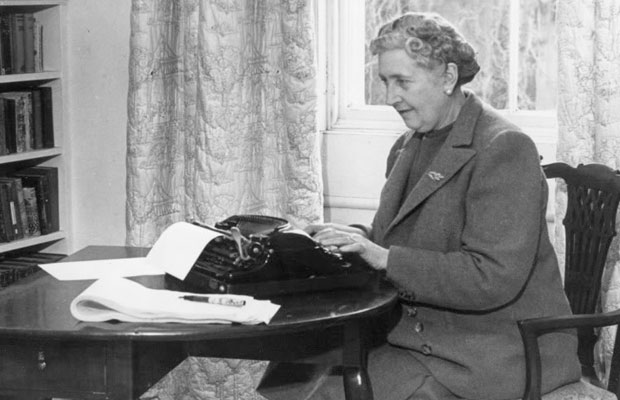
8 things you surely didn't know about Agatha Christie


1] Agatha Christie, as a child (then Agatha Miller) cried one whole day after her pet canary Dickie flew away. It was only late in the evening that they discovered that the impish Dickie was merely hiding over the curtain pole.

2] The young Agatha, once, hid her French book since she was quite fed up of the subject and her French tutor. Later, she was caught when her mother cleverly announced a chocolate as a reward to anyone who finds it. As Agatha recalls, her greed for chocolates was her undoing.

3] Agatha credits her sister Madge for introducing Holmes into her life. It was Madge who narrated to Agatha her first Sherlock Holmes story- The Blue Carbuncle. The Blue Carbuncle, The Red-headed League and The Five Orange Pips were Agatha’s favorites.

4] Bathing was one of the joys of Agatha’s life and she enjoyed it throughout her life, though rheumatism made it slightly less enjoyable for her during her twilight years.

5] Speaking of the celebrated author Charles Dickens, Agatha writes, “Our first Dickens was Nicholas Nickleby, and my favourite character was the old gentleman who courted Mrs Nickleby by throwing vegetable marrows over the wall. Can this be one of the reasons why I made Hercule Poirot retire to grow vegetable marrows? Who can say? My favourite Dickens of all was Bleak House, and still is.”

6] Once Agatha received a direct proposal by a man (one Mr. S) in an empty coach in a train. She told him no in an icy coldness and he leant back in gloom, both feeling miserable and awkward over the next 2 hours of train journey.

7] When pushed by her mother, Agatha wrote her first story ‘The House of Beauty’ towards her late teens.


8] She sketched her character of Alfred Inglethorpe (in her first novel ‘The Mysterious Affair at Styles’) on a bearded man she saw in a tram. 


Information compiled from An Autobiography of Agatha Christie


Friday, February 7, 2014

3 reasons why to attend the Delhi Literature Festival 2014

Image source: Google


What: Delhi Literature Festival (2nd edition)

When: 7th-9th February, 2014

Where: Indira Gandhi National Center for the Arts, NewDelhi

Why the hullaballoo: Because, it’s a festival which celebrates books, authors and literature in general

Who should attend: Readers, book lovers, authors, budding authors, book-hoarders and You

What to expect: Stimulating, exciting, engaging and enlightening discussions and literary sessions on books (and writing) served with delicious dollops of humour


3 reasons why to attend the Delhi Literature Festival 2014:

Reason 1) To interact with published novelists, publishers and intellectual people from the literary world

Reason 2) To make friends. *Happiness is to find someone who loves the same books you love*

Reason 3) To get a direct peep into the path of getting published. If you aspire to pen your own book (anthology, novel, cookery book, parental book, et al), this festival will tell you all about the ups and downs of the journey


Star presence of the festival: Arvind Kejriwal (in an Interview with journalist Barkha Dutt) on 9th February, Sunday, 7 pm.


Tuesday, February 4, 2014

Inside the heart of JK Rowling

Image source: kellieelmore.com


Trust JK Rowling to send millions into a tizzy every time she airs her thoughts on Harry Potter. Her legion of fans had jubilantly frenzied over her revelation of Dumbledore's sexual preferences a few years back. Now, once again, after a period of great calm, Rowling has brewed up the proverbial storm. So, when quizzed about the appropriateness of Ron and Hermione's relationship, the author gave away a piece of her heart as she disclosed how she linked up the two characters purely in pursuit of a personal ambition. She admitted that Ron and Hermione were the kind of couple whose marriage will easily run into a thick wall and will necessitate counselling.

Rowling sent another shockwave across her sea of followers as she articulated that in true literary sense, Harry (and not Ron) should have married Hermione. But she stuck to the Ron-Hermione pairing in the book since this is what she had envisioned at the beginning and her vision had less to do with a literary obligation but more to do with her own dire wish to get the two of them marry each other.

This perhaps gives us a peek into Rowling's heart, which must have undergone deep melancholy after her estrangement with her first husband. Though she did not admit it in explicit words as such, it does appear that she yearned for a happy fairytale ending for Ron; something she herself felt deprived of. It also goes to show how literary characters are often a partially-baked alter ego of their own creators. In fact, the writers are often as intriguing, if not more, as their most convoluted characters. Really, there is no better way of describing a writer...


~Ritesh Agarwal


Thursday, January 30, 2014

Jhumpa Lahiri: A peek into her personality

Jhumpa Lahiri at Kolkata Literary Meet, 2014


I am not sure how or where to begin. Jhumpa Lahiri, having written books like The Namesake and Unaccustomed Earth, may carry the reputation of a heavyweight author and of a celebrity who would have a certain degree of pompous air around her. But when I recently came across her, what struck me most was her reticence.  She talks less and only when it is required. She smiles lesser and only when she really wants to.

It's amazing how she can maintain a straight face even when a really good joke is being floated around. Some of my friends suggested that probably she is arrogant and does not reciprocate the warm greetings of her fans with equal warmth. However, I couldn't disagree more.

Jhumpa mam came across as a woman who is a fiercely private person. She doesn't make any effort to guard herself from public life. It comes quite naturally to her. It is also easy to see that she is not the kind who can socialise easily. She cannot open up in a way she opens up through her writings. In a way, her characters too reflect her persona in several ways. Many of her characters are emotional beings but they are emotional within their own private den. They seldom show their flood of feelings and often keep it suppressed for years until the dam bursts finally and the emotions are unleashed.

On meeting Jhumpa, one cannot figure out what is going inside her mind. Even when I spoke a couple of sentences to her before being ushered out, she just looked at me with her seemingly green eyes and offered no word, except for a thin smile which didn't betray her thoughts.

An outsider will find it hard, even impossible, to break through her shell and peep into her thoughts. She is a woman of few words, as they say, which is ironic in the most ironic way possible, since it is her words which have earned her a Pulitzer trophy and a Man Booker prize nomination.

When I come to think of it, I feel it is perhaps the way it should be with great writers. All their words reside inside their hearts and not on their faces. You've got to earn them. You've got to earn the right of passage into their hearts. There's no other way really.


Saturday, January 11, 2014

Agatha Christie and her sweet little childhood


I was just going through the wonderful posts of A Homemaker’s Utopia and loved her take on some of the classic authors like Tagore and Tolstoy. It is always great to read about old-age authors from the point of view of someone who has utmost admiration and knowledge for classics. So, in that regard, I’d say this post is directly influenced and inspired from the A Homemaker’s Utopia’s blog.

Currently, I am reading the autobiography of Agatha Christie. Mind it, it is an autobiography and not a biography. Though a biography can be as good, but at the end of the day, it is just a well-researched compilation of known facts about the person. An autobiography, on the other hand, is a direct window into the mind of the person and can be a treat for his fans and followers.

This book is deliciously thick and with tiny prints, just the way most classics are. Of the 600-odd pages, I have barely scraped through the first 100 at the moment. But I am already richer.

I feel Agatha must have gone through heavy bouts of nostalgia while penning this down. She wrote it during her final years and the first print of the book released after her death. So, in her mind, she retraced her steps from the ending point of her life to the starting point as she began narrating her journey right from her toddlerhood.

She had a pretty normal childhood. Her parents, she recounts, were a happy couple and stayed so throughout, till the unfortunate, and untimely, demise of her father when Agatha was around 11. He had succumbed to an illness and his wife (i.e. Agatha’s mother) was completely shattered.
Agatha had an elder sister called Madge and a brother called Monty. But they lived in their old world (due to the age gap) and Agatha spent the major part of her formative years under the wings of her nanny.
Agatha was quite a curious child and took to reading very early in her life. Her parents objected to the idea that children should be allowed to read before the age of 8 or 9. But incidentally, Agatha’s nanny told her parents one day- ‘Your daughter can read’. Agatha was just 5 at that time. Of course, her parents were upset with that development. After that, Agatha developed the habit of reading regularly and enjoyed it tremendously. You can say that even before turning 10, she was what we say ‘a voracious reader’.

There was an incident when Agatha stumbled onto a tabooed book in their library upstairs. It was an adult French book which children were not supposed to read. Her dad was furious when he caught her reading that. But Agatha merely shrugged, not knowing why he was so angry. She was, in any way, not able to take in any word written in that book.


~Ritesh Agarwal


Share please

How many stars?