Showing posts with label Comparative & English Literature. Show all posts

Thursday, December 17, 2015

Lady Chatterley’s Lover vs. Chokher Bali: A thematic comparison


Image Source: Flipkart 


It is enthralling to see how themes in different novels can often converge despite staying concealed from the eye of a casual observer. At times, the true theme of a tale is so deeply embedded that one has to dig out the superficial veneer to get to it.
'Lady Chatterley's Lover', a classic by DH Lawrence, perfectly exemplifies this view. Prima facie, it is a story about adultery though close reading of the text can throw up surprising epiphanies.

Penned and published in 1928, the highly controversial novel has had to endure the murderous gaze of prudish critics who lambasted the book severely at the time of its release. It was strongly condemned for its unapologetic sexual tone and graphic imagery which bordered on the taboo. But was there more to it than what met the eye of the immediate society?

The novel, sprawled over 300 pages, chronicles the story of Lady Constance Chatterley who is matrimonially chained to a man half-paralyzed. The lady's youthfulness is waning away behind the mundaneness of the usual chores of a life that is prosaic at its best. She is deprived and her body discovers redemption in the company of their keeper Oliver Mellors. What follows is social blasphemy, a torrid affair of adultery between a woman of higher stature and a man from the lower rung.

But though the woman's need for physical pleasure at the prime of her youth cannot be refuted, it is significant to discern the strong undertone of loneliness which is constant throughout the story. Lady Chatterley is not merely physically unsatisfied with her crippled husband but is also living in mental isolation. The disparate mindsets of the two people, with the man as a snooty high-nosed gentleman and the egalitarian woman bearing irrevocable sympathy towards the menial class, further distance her from Mr. Chatterley and intensify her loneliness. Her silent disapproval turns her away from him (even without her realizing so), makes her apathetic to his industrial ambitions and eventually makes her fully aloof, thus aggravating her solitariness.

So, should 'adultery' be labelled as the theme of the story, as has been done by generations of readers and critics? Or is 'loneliness' the underlying and the truer theme of the book?

Despite the above arguments which advocate for the permanence of loneliness, the question is debatable and cannot be put to rest easily. Theme is supposedly more concrete than motif and while the former is a constant, the latter is recurrent. There is a very thin line there as far as this novel is concerned, but probably it would be just to declare a woman's mental solitariness as the veritable theme, with the her recurrent sexual affairs as the motif.


“Lawrence was preaching sex as a kind of sacrament, and more than that, one that would save us all from the results of war and the nastinesses of our civilisation. …. ‘it is the crime of our times, because what we need is tenderness towards the body, towards sex, we need tender-hearted fucking.’”    [Doris Lessing's introduction to the new Penguin Classic edition]


On similar lines, one can put another classic on the table. Tagore's 'Chokher Bali' is similar in its theme even though here it is the man who goes out of his way to surrender to an extramarital fling. Mahendra, on finding no mental connection with his beautiful wife Ashalata, gets drawn towards Binodini, a widow who has come to stay at their home and with whom he is able to strike fascinating intellectual conversations.

 While Mahendra's attraction towards Binodini may be attributed to his need for a woman of his type, the imposing question that raises its fangs and demands to be answered is 'whether his felonious actions are governed by carnal desire or by the need for quenching a personal loneliness.' And once again, we find ourselves at a crossroad since the puzzling question can have multiple answers just the way this literary work can be interpreted in multiple ways.
It would appear that perhaps both are alone in their own rights (physically, mentally and figuratively) and they seek not merely sexual gratification but intellectual accompaniment. So, it wouldn't be wrong to call it a book dealing with loneliness rather than with adultery. Here too, we see aloneness as the theme and sex as the motif. But opinions will always be divided and many will see it the other way round (i.e. sex as the theme and aloneness as the motif).

Interestingly, both the pieces have been penned around the same time (1928 an 1903) and both project the woman in a negative light, without spraying much stain on the man's character. If Lady Chatterley and Binodini were wrong to tread on this path, then Oliver Mellors and Mahendra were equally wrong, if not more. But it is unfortunate that these stories are set in a patriarchal society which also hints at the underlying theme of male chauvinism; something which Lawrence and Tagore have masterfully expounded.


(Ritesh Agarwal,
CL-  Jadavpur University


Saturday, October 3, 2015

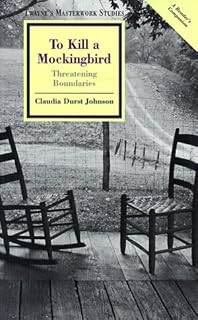
Hegemonic theme of To Kill a Mockingbird

Image source: Google images


‘To Kill a Mockingbird’ (by Harper Lee) has been tormenting the readers’ conscience for the past fifty years, drawing them into a world of racial bigotry and questioning our social and cultural values.

Narrated from the point of view of a girl-child, the novel explores the hegemonic white-black relationship in America, how a black is wrongly accused of molesting a white woman, and how a white lawyer fights for the accused and how the jury, despite its contrary personal beliefs, declares the accused guilty of felony.


Their action, quite in congruity to the existing American society’s bigoted mindset, confirms how racism is a hegemonic social state (it works in the human mind’s psyche).


Ritesh Agarwal
email: ritzy182000@gmail.com


Sunday, March 1, 2015

In the bazaars of Hyderabad-Sarojini Naidu (question-answers)


Q. How does Sarojini Naidu convey a message in the poem 'In the bazaars of Hyderabad'

A. Sarojini Naidu wrote this poem during the time of India's struggle for independence aiming to promote the boycott of foreign products.

      In this poem, Sarojini Naidu artfully describes the products made by the Indian craftsmen  and goldsmiths and myriad things sold by vendors, flowergirls, pedlars and fruitmen. Naidu wants people to boycott foreign products and provokes all Indians to consume indigenous products. She constructs a vivid, vivacious and colourful picture of the local bazaar of  Hyderabad in order to motivate her readers to visit indigenous markets. The hidden intent of the poem is not to give a visual description of the bazaars but to promote indigenous products amongst the citizens of the country. In context of the ongoing 'Swadeshi Movement', she suggests the boycott of British goods.

Instead of being preachy, direct and didactic, she simply presents a heart-rending portrait of Hyderabad's bazaars, showing its homeliness as opposed to the alienness of oversea goods.


-Ritesh Agarwal (for ICSE class 8)

email: ritzy182000@gmail.com


PS- If you liked the poem, kindly follow the blog through email

Also, if possible, please buy any product through the links in sidebar to help me raise my adopted pets


Thursday, February 5, 2015

Hermeneutics and diasporic novels


The Comparative Literature department of Jadavpur University played host to author Judy Fong Bates today and it was both gratifying and heartening for me to be a part of the audience. That is one good thing about being a student of JU. You get to meet, and even interact, with writers and poets from both Oriental and Occidental backgrounds.

The session introduced us to this woman-author who is Chinese by birth but has been living in Canada and hence her works are primarily diasporic, like those of Jhumpa Lahiri.
To be quite honest, I had had a heavy lunch that was having its soporific effect, making it difficult for me to direct my complete attention to what she was saying. On a couple of instances, I even dozed off, much to my chagrin and one Miss DDR will not be a happy person when she reads this.

But good ideas come to people either when they are in their bathtubs (please refer to Archimedes) or when they are just out of a nap. After failing to benefit much for the most part of the session (since I was groggy and also because the voice wasn't loud at the back bench where I was seated), I redeemed myself somewhat towards the final 5 minutes.
It was accidental, I would say in my defence, but the idea did fascinate me, and for a few moments, even I became my own fan.  *grins sheepishly*

Hans Robert Jauss' theory of hermeneutics erupted out of me all of a sudden (wish it had done so during the sem exam) and it struck me that a diasporic novel can have as many as four categories of readers who will receive the same piece of work with dissimilar emotions. In Judy's case (whose protagonist is Chinese living in Canada, like herself), these four kinds of readers will be:

1. A Chinese reader living in China and reading the story of a Chinese living in Canada.
2. A Chinese reader living in Canada and reading the story of a Chinese living in Canada.
3. A Canadian living in Canada (a local) and reading the story of a Chinese living in Canada, and
4. A neutral reader, say an Indian living in India and reading the story of a Chinese living in Canada.


Now, there is a good and subjective scope to analyse it, and this is where, I perceive, Jauss' Reception Theory springs into action.

The 1st kind of reader is a Chinese who presumably has never been to Canada. While reading the text, he will feel for the protagonist who shares his nationality but finds himself thrown into an alien world where he will be subjected to racial and cultural discrimination. The reader will undergo multiple emotions. He will be bemused at times, shocked on occasions, grieved and even disturbed in certain situations. He will feel the agony of the protagonist since there is a fraternal connect with him. However, he is an external reader who reads the story from the outside, knowing that it is not going to happen to him in his immediate surroundings. So, there is pity but not fear. (Like Ruskin Bond, at the recently held Kolkata Literary Meet 2015, had described reading a horror story as an experience of "safe fear"- you are scared for the protagonist, yet you feel safe, knowing that it is not going to happen to you).

But for the 2nd kind of reader, the reception of the text will be more personal. He is a Chinese living in Canada and thus shares the geography and associated circumstances of the protagonist. He will draw parallels with the journey of the protagonist and will often squeal, "oh yes, it happened to me too" or feel a jolt of fear, realizing that it may happen to him some day.

The 3rd kind of a reader is a Canadian and he will try to find himself not in the Chinese protagonist but in the authoritarian/discriminating/chauvinistic Canadian. He will either i) be quietly ashamed of the way outsiders are treated in his country or  ii) haughtily agree with the oppressor instead of pitying the protagonist (in this case, the reader is what I would call a 'passive racist'), or  iii) be indifferent, thereby playing a totally neutral reader (theoretically possible, though practically less probable).

So, for the 3rd kind of reader, we actually get three sub-categories, since individual readers will employ their personal subjectivity to arrive at three different viewpoints (and emotional response to the text) as expatiated above.

Then there is the 4th kind of a reader, the only kind that is totally unrelated to the protagonist and the anti-protagonist in terms of both nationality and immediate geography. He, therefore, has the liberty of reading the text for the purpose of pure pleasure and without undergoing the emotional burden of taking sides. However, complete neutrality is hard to achieve as it necessitates the reader to be completely isolated from such circumstances and also to employ an emotionless approach. So, he may get influenced disparately, depending on his background and cultural roots. For instance, an Indian reader, with a colonial past, is more likely to empathise with the Chinese protagonist in the book, while a European reader may not feel pity for the protagonist in the same degree and may even side with the anti-protagonist.

Coming back to the seminar at JU, perhaps I didn't frame my question to the best of my abilities but when I asked Judy as to "her target reader out of these four types", I couldn't extract out of her the answer I was looking for. Perhaps, she is herself unaware of the reader she is instinctively targeting (as she stated) but on my part, the profitable thing that came out of this session was my deeper understanding of hermeneutics.

-Ritesh Agarwal
Comparative Literature, Jadavpur University

05/02/2015


Wednesday, November 19, 2014

Brief summary of ‘A thing of beauty’ by John Keats


A thing of Beauty- By John Keats


John Keats, a British romantic poet, has sung to the glory of nature in the poem "A thing of beauty." He says that 'a thing of beauty is a joy forever.' Through this line, Keats tries to assert the permanence of natural beauty. Beauty of nature does not fade away with the passage of time. Rather, 'its loveliness increases' and it continues to give joy to an observer for eternity.

Keats includes celestial objects as well into his definition of nature. According to him, the sun, the moon and even the old withering trees offer permanent pleasure and dispel gloom and despondency from our lives.

The poet also borrows from Greek legends and calls their heroic deeds inspiring and exemplary. He compares their heroism to Ambrosia, an immortal drink containing the elixir of life. Just like Ambrosia makes a person immortal, in the same way, natural beauty and tales of heroism inject fresh life into our bodies. They banish all sorrows, agonies and hopelessness.


-Ritesh Agarwal


PS- Kindly buy any product from the banners displayed on the sidebar. The money raised will help me raise my three adopted pets.


Share please

How many stars?